
Composite Bonding Sheffield

99 High Street, Mosborough, Sheffield, S20 5AF Mon-Fri: 9:00-5:30pm

Cosmetic Dentistry

Composite Bonding in Sheffield

Composite bonding can be a conservative way to improve the shape, symmetry, and overall appearance of the smile. At High Street Dental Care, treatment is planned around your teeth, your bite, and the finish you want to achieve, with careful assessment to make sure the result looks balanced and feels natural.

Ready to arrange your visit?

Book online at a time that suits you, or contact the practice if you would prefer to speak to the team.

Book Online

A minimally invasive way to refine the smile

Composite bonding is often chosen by patients who want to improve chipped edges, uneven shapes, small gaps, worn corners, or the overall harmony of the front teeth without moving immediately to more invasive treatment. It can be a very effective option when the underlying teeth are healthy and the goals are carefully planned.

Because bonding is highly technique-sensitive, the consultation matters just as much as the material. We assess tooth shape, bite, proportions, colour, and the way the smile is seen in speech and at rest before recommending what is likely to look balanced and last well.

For some patients, bonding works best on its own. For others, it is better after whitening or following tooth straightening if the aim is to create a cleaner, more even final result.

Composite bonding may help when you want to:
Refine the shape and edge position of front teeth.
Improve small gaps or minor asymmetries in the smile line.
Restore worn or chipped areas with a conservative cosmetic approach.
Explore a treatment that can often be completed without more extensive tooth preparation.

Composite bonding case examples from High Street Dental Care

These real case examples show how composite bonding can enhance proportions, smooth asymmetries, and create a more even smile when treatment is planned carefully around the natural teeth.
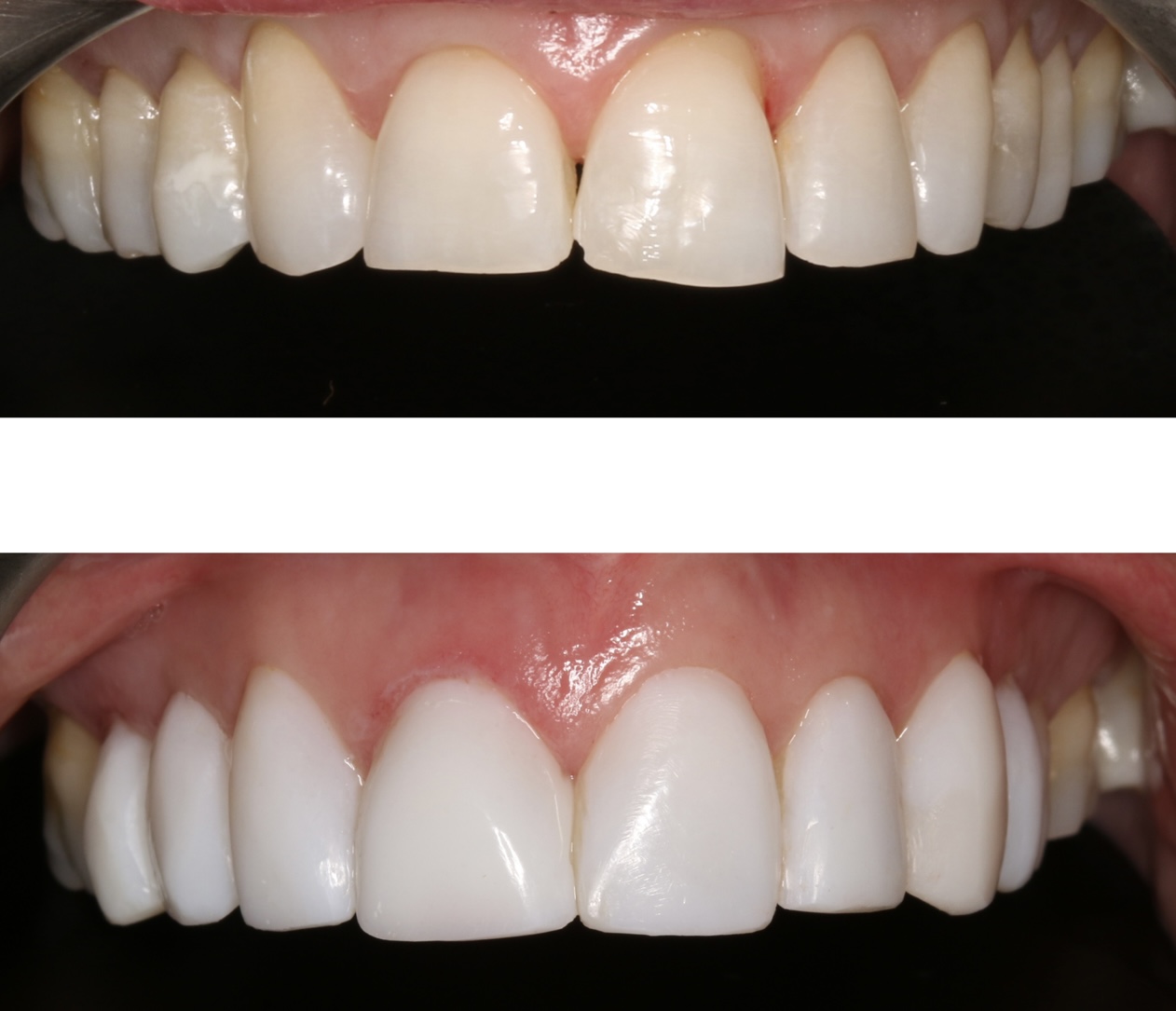
Composite bonding before and after case at High Street Dental Care

Composite bonding case

This example supports the discussion around refining the front teeth for a brighter, more even smile with a careful cosmetic finish.

During a consultation we assess the shade, tooth proportions, bite and wider smile balance before recommending whether bonding, tooth whitening, alignment or a broader smile design plan would give the most stable result.
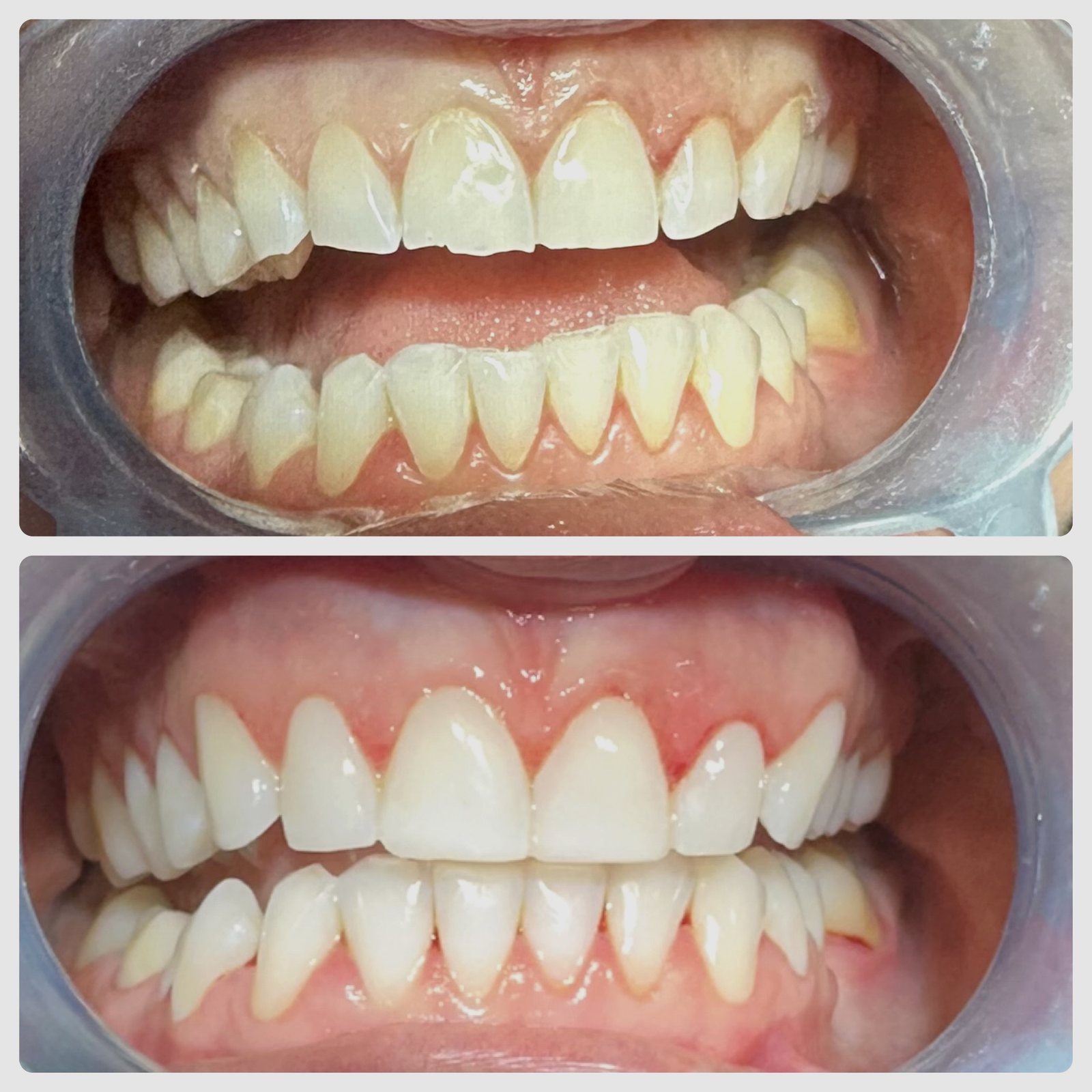
Full-arch composite bonding before and after case showing improved tooth shape, shade, smile line and edge symmetry in Sheffield

Full-arch composite bonding before and after

Before treatment, the teeth showed anterior crowding and mild rotations across both arches, visible staining, irregular chipped incisal edges, narrow lateral teeth and uneven tooth proportions.

Full-arch composite bonding was completed on the upper and lower teeth. The result created a more even smile line, improved the apparent proportions of the lateral incisors, softened the visual effect of lower anterior crowding, and achieved a natural warm-white shade with surface texture and light reflection designed to avoid a flat appearance.

Every composite bonding case is planned individually. Suitability depends on the health of the teeth and gums, the bite, the amount of tooth wear or crowding present, and whether tooth whitening, alignment or a broader smile design plan should be considered before bonding.

Not every smile concern is best treated with bonding alone

Composite bonding can deliver beautiful results, but it works best when it is chosen for the right reasons. If teeth are very crowded, heavily worn, unstable, or mismatched in colour, it may be sensible to discuss whitening, straightening, bite management, or a staged cosmetic plan first.

That is why we focus on planning rather than rushing into a cosmetic procedure. The aim is not only to make the teeth look better on the day, but to make sure the result is proportionate, maintainable, and appropriate for the way you bite and use your teeth.

Composite bonding consultations often consider:

  • The current shape, alignment, and colour of the teeth.
  • Whether whitening should be carried out first for better shade matching.
  • Whether tooth straightening would create a cleaner long-term foundation.
  • The bite and whether certain edges are at higher risk of wear or chipping.

How composite bonding is usually planned

1. Smile assessment and discussion

We discuss what you want to change, assess the teeth and bite, and decide whether bonding is the right fit for your goals.

2. Cosmetic planning

We consider shape, symmetry, edge length, proportions, and whether other treatment such as whitening or alignment should happen first.

3. Bonding appointment

Composite material is added and sculpted carefully so the final result looks smooth, balanced, and appropriate for the smile.

4. Review and maintenance advice

We explain how to care for the result and whether reviews, polishing, or follow-up adjustments are advisable over time.

Composite bonding vs veneers

Composite bonding is often chosen for smaller refinements such as chips, worn edges, uneven shapes or small gaps. It is usually more conservative than porcelain veneers because the material is added and shaped directly on the tooth.

Veneers may be more suitable where a larger change in shape, colour or surface finish is needed. Some patients also benefit from whitening or tooth straightening first, so the final cosmetic work can be planned on a cleaner foundation.

If you are deciding between treatments, a cosmetic consultation can compare composite bonding, smile design and veneers, tooth whitening and alignment options in one plan.

What affects the cost of composite bonding?

The fee depends on how many teeth are involved, how much reshaping is needed, whether other cosmetic treatment is planned first, and how complex the finishing detail needs to be. A small refinement on one or two teeth is very different from a broader smile redesign.

We prefer to advise after proper assessment so you understand the most suitable route and the likely fee for your own case rather than relying on a simplified estimate.

If you would like to spread the cost of treatment, please visit our finance page or contact the team for guidance.

A consultation helps decide whether bonding is the right cosmetic option for your smile.

We can assess your teeth, discuss your goals, and explain whether composite bonding alone is appropriate or whether another treatment sequence would create a stronger result.

Common questions about composite bonding in Sheffield

Will composite bonding look natural?

That is always the aim. The outcome depends on planning, tooth proportions, shade matching, and how well the result suits the rest of the smile.

Do I need whitening before bonding?

Sometimes yes. If you want a lighter overall smile, whitening first can make shade planning easier and more predictable.

Can bonding be used instead of orthodontics?

In some mild cases it may help improve appearance, but if alignment is a key issue, tooth straightening may be the better foundation.

Is composite bonding suitable for everyone?

No. Suitability depends on your teeth, bite, oral health, cosmetic goals, and whether the result can be maintained well over time.

How long does composite bonding last?

Longevity varies depending on the bite, oral hygiene, habits, diet, maintenance and how much bonding has been placed. We explain realistic expectations and aftercare advice at your consultation.

Is composite bonding better than veneers?

Neither option is automatically better. Bonding can be more conservative for smaller changes, while veneers may be considered for more extensive cosmetic changes. The right choice depends on your teeth and goals.

High Street Dental Care
NHS & Private Dentist Sheffield

0114 248 4400

reception@highstreetdentalcare.com

99 High Street,
Mosborough,
Sheffield,
S20 5AF